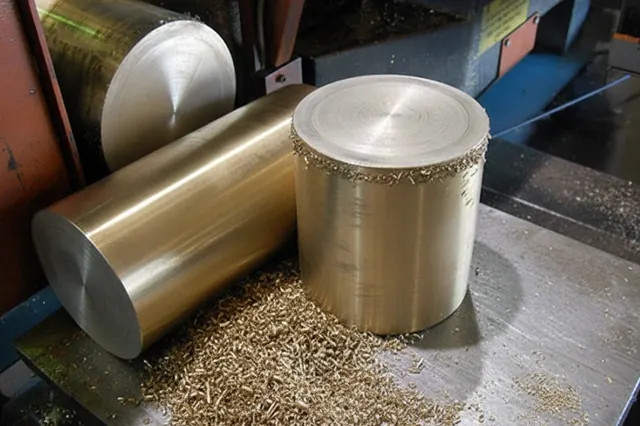
There is no single best bearing bronze. The right choice depends on a combination of load, sliding speed, lubrication, shaft material and hardness, operating temperature and the surrounding environment.
Common starting points
- C93200 (SAE 660): general-purpose, good anti-friction behaviour and easy machining.
- C90500: harder tin bronze for gears and wet service.
- C95400 / C95500: aluminum bronzes for higher loads, with hard mating shafts.
- C54400: free-cutting phosphor bronze for light-to-moderate duty and production turning.
Questions to answer first
- What load and sliding speed does the bearing see, and is lubrication continuous?
- What are the shaft material and hardness?
- Is the environment wet, abrasive, marine or lead-restricted?
- Does the bearing run against other bronze or steel parts?
Load and PV limits should be checked against the bearing designer’s data; this website does not publish such limits.
General information only. Verify grades, properties and specifications against the current standards and your project requirements before relying on this article.