Tin Bronze
C90500 — Tin Bronze (88-10-0-2, Gun Metal)
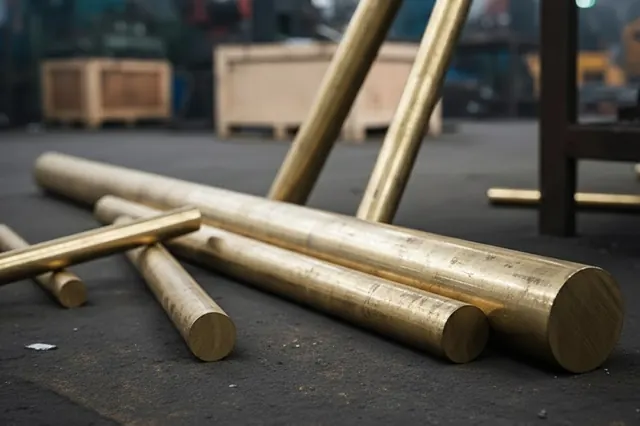
A harder gun-metal type tin bronze (about 10% tin) for bearings, gears and valve parts that need strength and corrosion resistance.
Grade overview
C90500 is the traditional “gun metal” composition – about 88% copper, 10% tin and 2% zinc. The higher tin content over C90300 produces a harder, stronger alloy with good wear characteristics and excellent corrosion performance in salt and fresh water.
It remains a favourite for components that must resist wear and corrosion together – for example worm wheels, bearings in wet service, and pressure-containing parts. It is more costly to machine than leaded alloys and should be selected where the properties justify it.
Alloy family and identification
Cast copper-tin-zinc alloy, UNS C90500, commonly referred to as gun metal or 88-10-0-2 tin bronze.
| Item | Detail |
|---|---|
| UNS designation | C90500 |
| Common name | Tin Bronze (88-10-0-2, Gun Metal) |
| Alloy family | Tin Bronze |
| Type | Cast copper-tin-zinc alloy |
Typical composition
| Element | Nominal limit, wt % |
|---|---|
| Copper (Cu) | 86.0 – 89.0 |
| Tin (Sn) | 9.0 – 11.0 |
| Zinc (Zn) | 1.0 – 3.0 |
| Lead (Pb) | 0.30 max |
| Nickel (Ni, incl. Co) | 1.0 max |
| Iron (Fe) | 0.20 max |
| Antimony (Sb) | 0.20 max |
| Phosphorus (P) | 0.05 max |
| Sulfur (S) | 0.05 max |
Reference data only – typical or nominal values from published specifications, not a guarantee of supplied material. Confirm against the current edition of the applicable specification, the product form and condition, and the material test certificate. Technical review by the company is required before publication or reliance.
Typical mechanical properties
Mechanical property values are intentionally not published here. They vary with specification, product form, size and temper or condition and will be added only once the governing specification and condition are confirmed. Request the applicable specification or test certificate with your inquiry.
Physical properties
Physical properties (density, thermal and electrical data) are not listed until verified against an authoritative datasheet. Contact us for current reference data.
Corrosion and wear considerations
Very good performance in fresh and salt water and steam; commonly used where corrosion and wear occur together. Not suited to ammonia-bearing or oxidising acid media.
Machinability and fabrication
Moderate machinability; plan for slower speeds than leaded bronzes. Good casting soundness makes it popular for pressure-containing parts.
Common industrial applications
- Worm wheels and gears
- Bearings in wet or marine service
- Valve and pump components
- Bushings for medium loads
- Steam and water fittings (design dependent)
Examples only. Suitability must be confirmed for the actual operating environment.
Available product forms
Sizes, tolerances and stock are not published and must be confirmed with the company.
Relevant products
Standards and specifications
- ASTM B584 – sand castings
- ASTM B505/B505M – continuous castings
Verify against the current edition and the exact product form before specifying.
Certification and inspection options
Material test certificates, chemical analysis, dimensional reports and third-party inspection can be requested with your inquiry. What can be supplied for C90500 is confirmed with the company for each order; no certificate is implied by this page.
Related grades
Frequently asked questions
What is gun metal?
A traditional name for tin bronzes of roughly 88% copper, 10% tin and 2% zinc, historically used for cannon and later for marine and valve components.
Is C90500 good in sea water?
Tin bronzes generally perform well in sea water, but suitability depends on velocity, design and conditions. Confirm for your specific service.
Need C90500 in a specific form?
Share your grade, dimensions, quantity and technical requirements with our team.