Bronze fittings
Silver Brazing Bronze Fittings
Socket-type bronze fittings intended for joining with silver-bearing brazing filler metals.
Overview
Silver brazing is a joining process in which a filler metal melts above roughly 450 °C (840 °F) and flows into a close-fitting socket by capillary action. Fittings intended for brazing therefore have a socket (cup) geometry sized to the mating tube, with the joint strength coming from the filler and the base metals.
Whether a particular fitting is suitable for silver brazing depends on the base alloy, the filler metal, the joint design, the service conditions and the applicable specification – none of which can be assumed from the fitting shape alone.
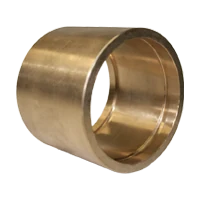
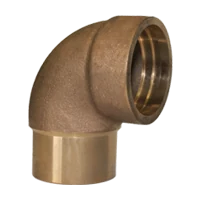
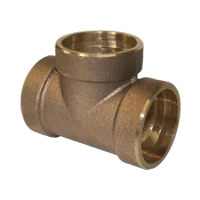
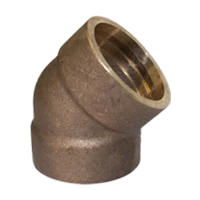
Representative bronze fitting photography. Actual style, connection details and dimensions follow your specification.
Joint design and connection considerations
Brazed joints rely on a controlled clearance between tube and socket and on clean, fluxed surfaces. The socket depth, tube outside diameter and wall thickness should be defined together.
- Tube OD and material to be joined
- Socket depth and clearance
- Filler metal and flux selection (by the brazing procedure)
- Cleaning, fit-up and heat control
Suitable material selection
Copper-based casting alloys are routinely brazed or soldered in fittings. Leaded alloys such as C83600 and C84400 can be more sensitive to overheating, while lead-free and tin-bronze grades have different behaviour. Aluminum bronzes need different procedures and are not treated as ordinary copper-tube brazing materials.
- C83600 / C84400 – general pipe fittings
- C92200 – steam and valve service
- C89833 – lead-free option (verify)
- Other grades – confirm suitability
Typical fitting configurations
Typical socket-type configurations include elbows, tees, couplings, reducers, caps and return bends. Only configurations technically appropriate to the grade and size are offered.
Industrial applications
Typical contexts for brazed bronze fittings include refrigeration-type circuits, water and heating systems and general fluid handling. Operating pressure, temperature and fluid must be reviewed for each design.
Compatibility and temperature limitations
Brazing temperature, filler composition and operating temperature all influence the finished joint. The joint will not necessarily be as strong as the fitting body, and pressure/temperature ratings depend on design and governing standards. No ratings are published here and they must be verified for your application.
Related materials and products
Not every grade is available in every fitting configuration; confirm availability for your size and fitting type.
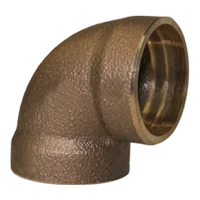 C83600 Bronze Pipe FittingsThe standard 85-5-5-5 cast alloy for general-purpose bronze pipe fittings, valves and plumbing components.View details →
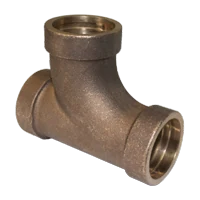 C84400 Bronze Pipe FittingsAn economical, highly machinable cast alloy (about 81-3-7-9) for general-purpose fittings, valves and plumbing hardware.View details →
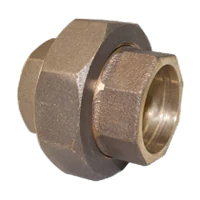 C92200 Steam / Valve Bronze FittingsA leaded tin-zinc bronze developed for steam and valve castings that need pressure tightness and reliable service in hot water and steam.View details →C89833 Lead-Free Bronze FittingsA lead-free cast copper alloy considered for fittings, flanges and valve parts where lead content in wetted components is restricted.View details →
Also see: Bronze Fittings overview · Bronze Flanges · Grade Directory
Frequently asked questions
Is silver brazing the same as soldering?
No. Brazing uses filler metals that melt above about 450 °C; soldering uses lower-melting fillers. They need different procedures and joint designs.
Can any bronze fitting be silver brazed?
No. Suitability depends on alloy, design and procedure. Confirm with the company and the brazing procedure owner.
Do you publish brazed joint ratings?
No. Ratings depend on the design and standard and are confirmed per inquiry.
Need silver brazing bronze fittings?
Share your grade, dimensions, quantity and technical requirements with our team.