Bronze Rods & Bars
Manganese Bronze Rod — C86300
A very high-strength cast “manganese bronze” (technically a high-tensile brass) for heavy-load gears, bearings and slow-speed components.
Product overview
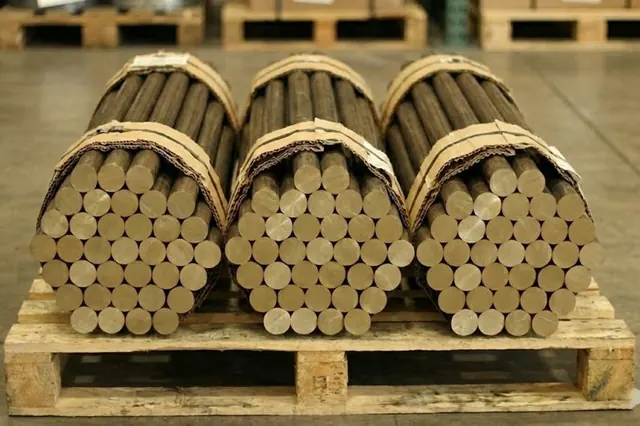
C86300 rod is requested for heavily loaded gears and slow-speed bearings. Confirm available size range, casting method and any mechanical testing needs with the company.
C86300 is the highest-strength grade among the commonly cast copper alloys. Its microstructure, strengthened with aluminum, manganese and iron in a copper-zinc matrix, gives very high strength and hardness with good wear resistance for slow-speed, heavily loaded applications.
It is not a tin bronze: although traded as manganese bronze, it is a copper-zinc high-tensile alloy. Its corrosion resistance, particularly in sea water and in the presence of stagnant or aggressive fluids, is more limited than aluminum or nickel-aluminum bronzes, and it is subject to dezincification in some environments.
Material identification
| Item | Detail |
|---|---|
| UNS designation | C86300 |
| Material | High-Strength Manganese Bronze |
| Alloy family | Manganese Bronze |
| Alloy type | Cast copper-zinc-aluminum-manganese-iron alloy |
| Product form | Rod / Bar |
| Availability | Listed – sizes, tolerances and stock confirmed per inquiry |
Where it is used
- Heavy-load gears and worm gears
- Slow-speed bearings and wear plates
- Valve stems and guides (design dependent)
- Press and mining equipment components
- Large structural bronze parts
Machining and fabrication
Machinable with suitable tooling at moderate rates. Hard and strong, so tool wear is notable. Weld repair requires qualified procedures.
Forms and sizes
- Round rod / bar (solid)
- Hollow bar / tube blanks – subject to confirmation
- Square, hexagonal and flat bar – subject to confirmation
- Cut lengths and machined blanks – subject to confirmation
Available diameters, lengths, tolerances and tempers are not listed on this website and are confirmed per inquiry. Do not rely on this page for dimensions, tolerances or stock.
What to include in your inquiry
- UNS grade and governing specification
- Dimensions (or drawing) and tolerance class
- Quantity and delivery timing
- Application and operating environment
- Certificate / inspection requirements
Composition reference
| Element | Nominal limit, wt % |
|---|---|
| Copper (Cu) | 60.0 – 66.0 |
| Zinc (Zn) | 22.0 – 28.0 |
| Aluminum (Al) | 5.0 – 7.5 |
| Manganese (Mn) | 2.5 – 5.0 |
| Iron (Fe) | 2.0 – 4.0 |
| Nickel (Ni, incl. Co) | 1.0 max |
| Tin (Sn) | 0.20 max |
| Lead (Pb) | 0.20 max |
Reference data only – typical or nominal values from published specifications, not a guarantee of supplied material. Confirm against the current edition of the applicable specification, the product form and condition, and the material test certificate. Technical review by the company is required before publication or reliance.
Commonly referenced specifications
- ASTM B147/B147M – aluminum-bronze and manganese-bronze sand castings (coverage to be confirmed)
Related grades
Frequently asked questions
Is manganese bronze a true bronze?
Commercially it is called bronze but it is a high-tensile copper-zinc alloy. This site follows the industry naming.
Is C86300 suitable for sea water?
Generally not preferred – aluminum or nickel-aluminum bronzes are the usual sea-water choices. Confirm for the service in question.
Looking for C86300 rod?
Share your dimensions, quantity and documentation needs with our team.